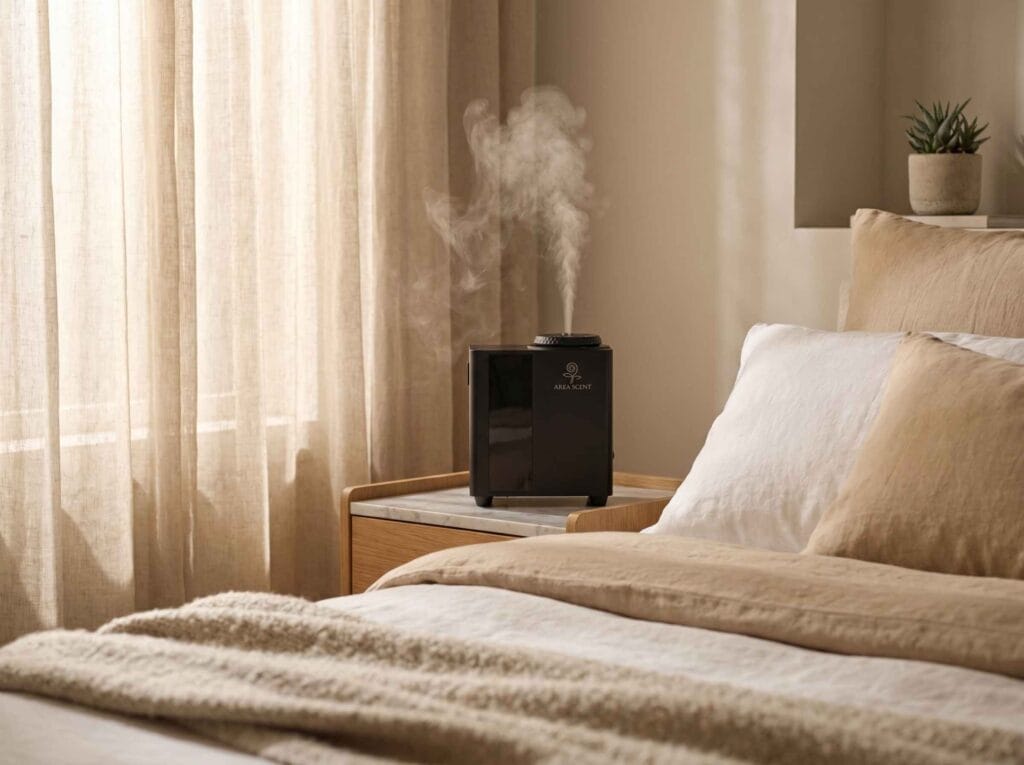
If you’ve just brought home an aroma oil diffuser or you’re scrolling through reviews at 1 a.m. wondering if that gentle mist drifting across your bedroom is secretly doing something to your lungs you’re not alone. “Is diffusing essential oils safe to breathe?” and “do oil diffusers affect your lungs?” are some of the most searched wellness questions right now, and for good reason. We breathe whatever we put into the air, so the question deserves a real answer, not just a marketing one.
Here’s the short version: a cold-mist (ultrasonic) diffuser running IFRA-certified aroma oil is one of the safest ways to scent a room but “safe” comes with a few real-world conditions worth understanding, not just assuming.
How a cold-mist diffuser actually works
Unlike candles or heat-based diffusers, a cold/ultrasonic diffuser doesn’t burn or heat anything. It uses high-frequency vibration to break the oil-and-water blend into an extremely fine mist visually similar to the cool mist you’d see near a waterfall. No combustion, no heat, no smoke. That single mechanical detail is the foundation of why this diffusion method is considered gentler on your respiratory system than smoke- or heat-based alternatives.
So is it the same as vaping? (No and here’s the actual difference)
This is one of the most common doubts people search for, and it’s a fair one to ask. Vape pens and “essential oil vape sticks” work by heating a liquid (oil, water, glycerin) into a hot, inhaled vapor a mechanism genuinely similar to e-cigarettes.
A cold-mist room diffuser is mechanically different. There’s no heating element, no combustion, and you’re not inhaling concentrated vapor directly from a device into your mouth — you’re breathing ambient, highly diluted aroma molecules dispersed across an entire room. The comparison to vaping really only applies to personal heated inhalation devices, not to a tabletop diffuser scenting a bedroom. Conflating the two is a common mix-up, but they don’t function the same way and shouldn’t be treated as equivalent.
Why “IFRA-certified” actually matters (and isn’t just a label)
This is the detail that separates a genuinely safe diffuser oil from a random bottle off the internet. IFRA the International Fragrance Association sets the global benchmark for fragrance ingredient safety, including maximum safe concentration levels for different product categories. Reputable diffuser brands that follow IFRA’s standards (the most recent update being the 51st Amendment) are formulating their oils against rigorous, independently maintained safety thresholds rather than guesswork.
In practice, this means an IFRA-compliant aroma oil has already been evaluated for safe concentration limits before it ever reaches your diffuser which is a meaningfully different starting point than an unregulated, uncertified oil blend.
What about the “it’s vegetable oil, not chemicals” claim?
This is a half-true claim worth being precise about, because precision is what actually builds trust. Many premium aroma diffuser oils are carrier-blended with vegetable-based oils rather than harsh synthetic solvents, which is a genuine safety plus it avoids the harsher synthetic additives linked to respiratory irritation in lower-quality products. That said, “natural” and “zero risk” aren’t quite the same thing; even plant-derived aromatic compounds are technically classified as volatile organic compounds (VOCs) once dispersed into air. The honest, useful takeaway isn’t “there’s nothing in the air,” it’s “what’s in the air is regulated, diluted, and IFRA-screened” which is a real and meaningful safety difference from an unregulated product.
Can it cause an allergic reaction?
For the average healthy adult, a quality IFRA-certified diffuser oil used as directed carries a low risk profile most documented issues involve device misuse (overfilling, dirty water reservoirs, leaving it running for many hours non-stop) rather than the oil itself. That said, individual sensitivity is real and varies person to person, the same way it does with any scented product, skincare item, or even certain foods. A small minority of people particularly those with asthma, other diagnosed respiratory conditions, or known fragrance sensitivities may notice irritation with any scented product, certified or not. If that’s you, it’s worth introducing a new diffuser oil gradually and paying attention to how your body responds, rather than running it for hours on the first night.
Simple habits that make any diffuser safer
Regardless of how premium the oil is, a few basic habits matter more than people expect:
- Don’t run it on a continuous 24/7 loop. Intermittent sessions (a few hours on, then off) are gentler on a closed bedroom’s air than nonstop diffusion.
- Keep the room reasonably ventilated. A fully sealed room with zero airflow lets any scent even a mild one build up more than it needs to.
- Clean the water reservoir regularly. This matters more than people realize: standing water in any ultrasonic device can harbor bacteria or mineral buildup over time, regardless of how good the oil is.
- Use the manufacturer’s recommended dosage, not “more for a stronger scent.” Concentration, not just oil quality, is what determines how mild or strong your exposure is.
This article is for general informational purposes and isn’t a substitute for medical advice. If you have a pre-existing respiratory condition or experience any discomfort while using a diffuser, please consult a healthcare professional.